


- From May 18 to 20, 2026, the 21st Wuhan International Optoelectronic Expo was successfully held. Centered on the theme of "Connecting All Things with Light, Leading the Future with Intelligence", the event set up a featured exhibition area integrating optical communication and AI. It gathered leading optoelectronic enterprises worldwide, fully displaying full-chain innovative achievements of optical communication that underpin the booming AI computing power industry, and clearly defining the future development trajectory of the sector.
- The vigorous growth of AI computing power has become the core driving force for the advancement of the optical communication industry. The industry has reached a consensus that there is no AI or computing power without optical communication. Statistics show that the global market size of AI-specific optical transceivers will reach 26 billion US dollars in 2026 with an annual growth rate exceeding 57%. High-speed optical interconnection has evolved from an auxiliary facility into a strategic resource that determines the performance ceiling of AI data centers. As large-scale intelligent computing centers and AI computing clusters are being built rapidly worldwide, the surging demand for high-speed data transmission, high-density networking and low-latency interconnection has pushed the optical communication industry into a new phase of rapid upgrading and iteration.
High-speed Module Upgrading & Architectural Innovation: NPO and CPO Become Core Development Trends
In the field of high-speed optical modules, 400G and 800G products have achieved large-scale commercial application with steady growth in shipments. 1.6T optical modules have matured technically and are stepping into mass commercial deployment. Technological breakthroughs and engineering verification have been realized in 6.4T NPO and 12.8T XPO solutions, laying a solid foundation for ultra-large-scale computing power networking in the future.
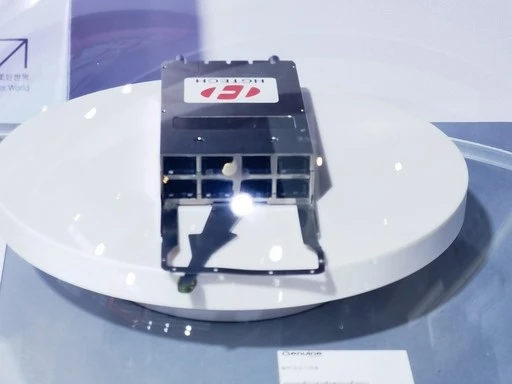
12.8T XPO

6.4T NPO

G.654.E ultra-low loss optical fiber
In the next three to five years, pluggable solutions including 1.6T and XPO will coexist with NPO and CPO architectures without single-track dominance. As the mainstream transitional solution from 2027 to 2029, NPO balances performance, power consumption and maintainability. Regarded as a long-term development goal, CPO targets ultra-high bandwidth scenarios such as 3.2T and 12.8T, and is expected to be widely commercialized after 2028.
Meanwhile, silicon photonics technology, featuring high integration, low cost and low loss, has been widely adopted in optical modules above 400G, becoming a standard solution for high-speed data communication products and greatly facilitating large-scale cost reduction and efficiency improvement across the industry.
Breakthroughs in Localization to Consolidate Industrial Security Foundation
The acceleration of full-chain localization substitution has enabled core materials and components to achieve remarkable progress in optical communication industry. Upstream supporting sectors including optical fiber, cable and core optoelectronic devices have made continuous technological breakthroughs. A host of new products have been launched successively, such as hollow-core fiber, G.654.E ultra-low loss optical fiber, large-core-count optical cables and LNOI thin-film lithium niobate modulators. In addition, the production capacity of high-speed EML and DML optical chips has been steadily expanded, while high-density passive components including WDM devices and MPO/MTP connectors have realized mass production. These advances effectively make up for industrial supply shortages, ease long-term technical bottlenecks, improve the complete industrial supporting system, accelerate the full-chain localization process, and steadily enhance the independent controllability of core technologies in the optical communication sector.
In terms of market layout, the industry is developing steadily driven by both data communication and telecom markets. The construction of AI data centers has fueled explosive demand for high-speed optical interconnection, while the upgrading of backbone communication networks featuring 800G long-distance transmission is steadily advancing. Rising demands for communication infrastructure at home and abroad have further broadened the overall development prospects of the industry.
Signals released from this expo indicate that the optical communication industry will keep advancing towards higher speed, lower power consumption, higher integration and higher density. With faster technological iteration, market competition has shifted from single-product rivalry to comprehensive competition covering R&D capability, overall solutions, product quality and delivery efficiency.
Keeping pace with industrial trends, OPTICO seizes opportunities brought by the integration of optical communication and AI. We closely follow the iteration trend of high-speed optical communication technologies, focus on core business and strengthen R&D investment. By continuously optimizing product portfolios and networking solutions, we actively engage in the construction of global digital information infrastructure. We are willing to cooperate with peers worldwide to jointly embrace a new chapter of high-quality development in the optical communication industry.